Saturday, April 08, 2017

Parsha Tzav: Just Do It (Because You Have Been Commanded)


Motivation is a big issue in modern life. Most of us lack it at least some of the time, and the internet is teeming with things to get you motivated. There are millions of pictures with imagery of powerful animals, people standing victoriously on mountain tops and using a pair of scissors to turn "I can't" into "I can". 

If those don't work for you there are apps for your phone that gamify your goals. Create an avatar, compete against your friends, and "level up" as you earn points, badges and rewards. Any habit will do, from adding protein powder to your smoothie to reading to your child at night. Nothing is too trivial or important. 


God Doesn't Ask; He Commands

This week's Torah portion is Tzav, which literally means "command." God speaks to Moses and says:

צַו אֶת-אַהֲרֹן וְאֶת-בָּנָיו לֵאמֹר
Command Aaron and his sons, saying:

God doesn't say:
"Give Aaron and his sons these instructions about sacrifices in the tabernacle." 
Or:
"Offer Aaron this responsibility." 

And definitely not:
"Run these instructions by Aaron, get his feedback for revisions, and then let's start negotiating the process for keeping the holy fire tended."

These are commands, and commands are to be carried out by the commanded. To be frank, I'm a little jealous of Aaron and his sons. They don't need any motivation to carry out their responsibilities. They have been commanded, and because of their covenant with God, they obey. 

Choices are demanding, and modern Jews have saddled themselves with hundreds of decisions that our ancestors, even our recent ones, never considered. From the mundane (is it ok to eat a pork chop?) to the sacred (is it ok to work on Shabbat?). 

My great-grandmother never had to be motivated to keep a kosher kitchen or clean cabinets and change dishes for Passover. It's what you did, and it was a mitzvah, a commandment, to do so. (Can you tell that I'm putting off cleaning for Passover by writing this blog? Shh.)

Recent generations have taken great pride in throwing off religious systems that command certain behaviors and lifestyles. We are all "Jew by choice," we are told, with the added luxury of getting to choose how we express our Judaism. We are free to sift among the "commandments" and follow some, disobey others, and disregard many of them completely. I am most certainly one of those Jews, and as an educator, I love when teens find something in Torah they can really grasp onto and use in their modern, non-observant lives. I wonder, though, if I am doing them a disservice, teaching them to bend the Torah to their lives instead of changing their lives for Torah.

My Orthodox/observant friends generally don't struggle with following the commandments. I once asked such a friend if he ever snuck a bite of a cheeseburger, just to see what he was missing. "No," he said, "keeping kosher is my field of new, untrod snow, and I don't want to ruin it by trampling on it. I want to keep it perfect." He doesn't have to wrestle with the desire to eat treif (non-kosher) food, because he doesn't have the desire. 

"I have no choice"
Steve Jobs famously wore the same outfit every day, eliminating the "What to wear?" decision from his life.
Modern Americans are all about choice, and it can be overwhelming. Go into a grocery store sometime and just try and count the varieties of tea available for purchase. I don't know about you, but when I was a kid in the 70s and 80s there was just "tea." Hot or iced, perhaps, but still just "tea." 

And so we stand there in the tea aisle, or the coffee shop, or the store with 50 styles and fits of pants, overwhelmed by the choices. I've often thought, "Someone just tell me what to buy," which is really a plea to be commanded, to have the choice removed.

As Frankfurt-born psychoanalyst Erich Fromm writes:

"In the process of becoming freed from authority, we are often left with feelings of hopelessness... that will not abate until we use our 'freedom to' and develop some form of replacement of the old order." 
Removing the choice about whether or not to do something is, paradoxically, liberating. Most of us don't lie in bed in the morning wavering about whether or not to go to our jobs, or go to school. We may not do so happily, but we've taken on an obligation, so we go. In contrast, we've all put off tasks that are optional, even if they are also important. (Going to the gym, walking the dog, cleaning the bathroom, taking vitamins, balancing the checkbook, etc.) To do those things, we need the magical ingredient: motivation.

In the Torah, Aaron was commanded to keep the fire burning:


ה  וְהָאֵשׁ עַל-הַמִּזְבֵּחַ תּוּקַד-בּוֹ לֹא תִכְבֶּה, וּבִעֵר עָלֶיהָ הַכֹּהֵן עֵצִים בַּבֹּקֶר בַּבֹּקֶר; וְעָרַךְ עָלֶיהָ הָעֹלָה, וְהִקְטִיר עָלֶיהָ חֶלְבֵי הַשְּׁלָמִים.5 And the fire upon the altar shall be kept burning thereby, it shall not go out; and the priest shall kindle wood on it every morning; and he shall lay the burnt-offering in order upon it, and shall make smoke thereon the fat of the peace-offerings.
ו  אֵשׁ, תָּמִיד תּוּקַד עַל-הַמִּזְבֵּחַ--לֹא תִכְבֶּה.  {ס}6 Fire shall be kept burning upon the altar continually; it shall not go out. 
Aaron receiving the weight of his priestly vestments.
God didn't really care if Aaron felt like adding wood to the fire each day and making the offerings. The fire staying lit wasn't based on Aaron's morning motivation to do so. He had agreed at the base of Mt Sinai that all God commanded, he would do. 

No motivational posters, apps, or Fitbit required -- Aaron tended the fire and performed the sacrifices.

Who Commands Us?
Modern Jews often find themselves in a quandary when it comes to following the rules of Judaism. The Torah and God are, in Fromm's terms, the "old order" which we have shaken off in an effort to feel and be more free. Fromm goes on to suggest that those who don't use this "freedom from" properly will look for replacements for the old order and often turn to authoritarianism, destructiveness, and conformity. (Fromm argues that this is how Nazi culture took hold in the 1930s. The old order dissolved and people were disoriented by their own freedom, so they accepted Nazi authority.)

That's damn scary, and it's not what I'm suggesting here. Many believe there is no higher authority to answer to, no one to do the commanding. You'll get no argument from me; believing in the truth of the Torah and accepting its divine origins would certainly make it easier for me to follow the rules. I'm not willing to make that jump, and I doubt most of my Jewish contemporaries are either.

Go Ahead, Be Obligated. 


We command ourselves, sure, but what if we play a little mind game with ourselves? What if we take on a mitzvah, just one, as if we are commanded to? Whether or not our motivation waxes and wanes, we have been commanded to perform the mitzvah, we have agreed to obey, and so we do.

There are a lot of mitzvot to choose from: (Of the 613 commandments in the Torah, 365 are negative/don't do commandments, and 248 are positive.) For this exercise, let's take on a simple, positive commandment of Jewish prayer.** Here are some easy daily practices:
  1. Say the Shema twice daily — Deut 6:7 (Link to Shema)
  2. Pray every day — Exodus 23:25 (Use the Amidah or another Jewish prayer. Link to Reform Version)
  3. Bless the Almighty after eating — Deuteronomy 8:10 (Link to short version of the Birkat Hamazon)
  4. To learn Torah — Deut 6:7 (Link to list of the weekly parsha here. Each parsha is divided into 7 different readings, so you can do one each day.)

Accept the obligation to recite one of these daily, as if you were commanded. 
Do it the same way every day -- whichever form of the Amidah or the Birkat Hamazon you choose, use it every day. 
Try it for a week.
Share with me (or someone else) your experience.

I'm taking on #2, reciting the Amidah each day. What do you choose?


*Mitzvah in Hebrew comes from the same root as tzav, and although many people now think of a mitzvah as a "good deed," "commandment" is a more accurate translation. There are 613 mitzvot (commandments) in the Torah, not 613 "good deeds".]
** I chose prayer specifically because these prayers are uniquely Jewish. There are other commandments to choose from. Here's a list: all: https://en.wikipedia.org/wiki/613_commandments#Maimonides.27_list


Saturday, April 01, 2017

Parsha Vayikra: It's the Little Things

The Little Aleph


I'm not going to kid anyone -- the book of Leviticus/Vaikra can be a rough read. The slicing and dicing instructions for sacrifices and long lists of laws with severe consequences appear on almost every page. Laws that do not square with our modern sensibility. Laws that have caused immeasurable pain in our society. Laws against homosexual relations. Laws that determine menstruating women are "unclean".

Leviticus is also the repository of the "Huh?" laws prohibiting mixing fabrics, getting tattoos, cross-breeding animals, picking up fallen grapes in your vineyard, tearing your clothes, and letting your hair become unkempt.

Modern, progressive Jews have largely set aside the laws of Leviticus. We don't notice if we mix linen and wool, we get tattoos, and some of us let our hair get quite messy. The laws against homosexuality -- which in Vayikra carries the death penalty -- are abhorrent to us.

Ditch Leviticus?

B'nai mitzvah kids hate it. Progressives flinch when conservatives quote its verses. We no longer have a Temple in Jerusalem, which most of the laws apply to. Is the only reason we read Leviticus in 2018...

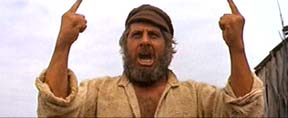
Tradition!

The little aleph says no. 

The little aleph says, look for the small things, the hidden wisdom. Look for what your eye may have scanned over the first time. See what's there, in the spaces, in the silence.

How?

1. Accept reading and studying Torah as an obligation. One of the consequences of reading Torah on a schedule every year is that we can't skip chapters or books that don't resonate with us. It's a homework assignment: You don't have to like it; you do have to do it.

2. Cherry pick. When people are accused of "cherry-picking" the bible and only quoting parts that suit their agenda, I have a hard time joining in the chorus that shames them. As humans in 2018, we have no choice but to cherry-pick the Torah for verses and ideas that are meaningful to us.

3. Use Commentary and Modern Translations. Yes, read the actual text of the Torah, but read it alongside commentary. Rabbis and Jewish educators have spent thousands of years combing the Torah for meaning in every era, and they've struggled with the same ideas you do. This year I highly recommend Rabbi Jonathan Sacks' commentary: http://rabbisacks.org/call-vayikra-5778/. I've been reading his book Lessons in Leadership for each parsha this year.

4. Remember the Aleph. Any tidbit of Torah that makes you think, challenges a position you hold, or enlightens your view of Judaism is enough.

Too many people turn away from Torah study because the study itself is so demanding.

Lean in.

You really do get an A for effort.

Or maybe an aleph.


Friday, March 31, 2017

For the Record: Beatles Shabbat D'var Torah

Speaking Words of Wisdom

A drash on parsha Vayakhel-Pekudei  Exodus 35:1 - 40:38
delivered at Congregation Har Shalom's Beatles Shabbat.
(Beatles lyrics are in bold.)


When I find myself in times of trouble, words of Torah come to me. Speaking words of wisdom: You are free.


We finish the book of Exodus this week: Moses has told all the people to Come Together. It’s time to reconcile after the incident of the golden calf.


Listen, Moses says:
You say yes
I say no
You say stop
I say go
I say high
You say low
You say why?  And I say I don’t know!


Life is very short, and there’s no time for tzuris and mishegas, my friends.
Try to see it my way? C’mon. We can work it out.


Now, money can’t buy you love, but it can buy you a heck of a tabernacle and some downright groovy priestly vestments. So, I’m asking for your Help. I need somebody. Not just anybody. I need everyone.


Haven't you felt that yearning in your heart, Moses asked them? Haven’t you said,
I really want to see you
I really want to be with you
Really want to see you Lord
But it takes so long, My Lord


It’s all right. Even if we had Eight days a week, it’s  long and winding road. But I will be with you. You know I will.


But even Moses needed a capital campaign.
It’s gonna take money.
A whole lot of spending money
It’s gonna take plenty of money
To do it right, children


And it’s gonna take time
A whole lot of precious time
It’s going to take patience and time
To do it right.


And so the people gave --
ability ...
Offerings  for the work of the Tent of Meeting and for all its service and for the sacral vestments.
Men and women, all whose hearts moved them,
Brought gold to the LORD,
They came bringing brooches,
earrings,
rings,
and pendants—gold objects of all kinds.


And everyone who had in his possession blue, purple, and crimson yarns, fine linen, goats’ hair, tanned ram skins, and dolphin skins, (From the Octopus’ Garden maybe?) brought them.


Everyone who would make gifts of silver or copper brought them as gifts for the LORD;


Everyone who had in his possession acacia wood (Not Norwegian Wood) for any work of the service brought that.


And all the skilled women spun with their own hands, and brought what they had spun. And to keep the camp running,  there was someone fixing a hole where the rain got in, filling the cracks that ran through the door, and painting the room in a colorful way.


The people actually had to be restrained from giving too much, for each said:
I'll give you all I got to give if you say you'll love me too
I may not have a lot to give but what I got I'll give to you
Nothing you can sing that can't be sung.
Nothing you can make that can't be made.
Nothing you can know that isn't known.
Nothing you can see that isn't shown.
Nowhere you can be that isn't where you're meant to be...


This sanctuary depends on its individual elements. If one of the elements -- if one of the people, if one of the talents -- is missing, the tabernacle is incomplete.


The whole, forged by the combination of these individual pieces, is far more than the sum of its parts. When brought together, the different parts of the sanctuary all resonate with the divine, with G-d’s presence. Your piece of thread. Your curtain. Your glass for the ner tamid. Your music. Your leadership. Your carpentry skills. Your teachings. Your soul. Everyone getting by with a little help from their friends.


Yes, we must develop our own abilities as best we can, but then we must join together with others to complete the larger task, magnifying your own contribution, and creating the whole.


It takes a while to see this. When I was younger. So much younger than today. I never needed anybody’s help in any way. But now those days are gone and I’m not so self assured. Now I find, I’ve changed my mind, I’ve opened up the doors.


And the people, having seen what they could do, realized: There's nothing you can do that can't be done.

But, despite what The Beatles said,  you do need more than love. They worked a hard day’s night, working like dogs.  They were no longer a nowhere  people sitting in a nowhere land. They had a ticket to ride, and they stopped being a Band on the Run.


When the tabernacle was finished, “a cloud rested upon it, and the glory of the divine filled the sanctuary” and the people said, ”And though the night is cloudy, there is still a light that shines on me. Shine until tomorrow. Let it be.


The people, the God and the Sanctuary: One and One and One is Three.
“I’ll be there,said the Divine. “And everywhere. Here, there, and everywhere.”


When the cloud arose, the children of Israel set forth on all their journeys. Together, singing: Our life together. Is so precious together. We have grown, we have grown.


It’s time, children of Israel. Children of Har Shalom. Our kehilah.


Take these broken wings and learn to fly.
All your life.

You were only waiting for this moment to arise.

Friday, March 03, 2017

Anxiety In, Anxiety Out

It's March 3, 2017, and Donald J. Trump has been president of the United States for 42 days, and it's been (only) 114 days since he won the election. That's not even the length of two Kardashians! The stress and anxiety levels I see in my family, town, religious community, and progressives everywhere have skyrocketed since that fateful day in November.

What stresses me out even more than the presidency, though, is how it's affecting our kids. How we're letting it affect our kids.


We Set the Stage

This has been an amazing two years. The Republican candidates were a train wreck, and no one -- not the networks, not the newspapers, not the people -- could look away from the carnage. "Get a load of this! A reality TV star running for president!" 

In our family, we watched all of the primary debates and followed along daily as Republican candidates fell like dominoes in the face of the Trump machine. It was a laugh. None of these people would stand a chance against Bernie Sanders or Hillary Clinton, so why take it seriously? And the media kept feeding us, long after we were full. 


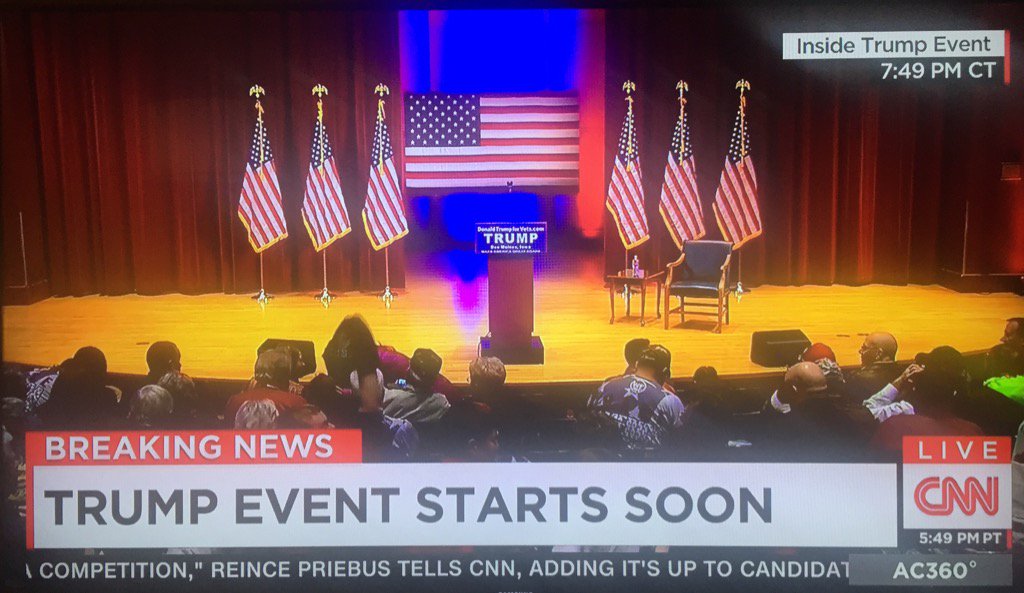
CNN, MSNBC, and the rest of the networks spent hours broadcasting empty podiums where Trump was going to speak "any minute now." On CNN, Trump received 78% of the coverage between August and September 2015. By November of that year he had received more coverage the entire Democratic field put together.


It was great for the ratings, but bad for the country, one news executive would say post-election.


There was nothing else to report while this was on screen?
 It's not "breaking news" that a planned event will start soon, by the way. 

We Stoked the Fear

If you're a progressive, think back to how you talked to your children about Trump between August and November of this year, when he was selected as the Republican nominee and when he won. We presented a Trump presidency in the direst of terms:


  • Armageddon
  • World War III
  • death of the environment
  • cataclysmic
  • the fourth Reich
  • the end of women's rights
  • the end of civil rights
  • Hitler-esque
  • catastrophic
  • devastating
  • impossible

I felt free and justified to use all of these scare-words and more when talking to my kids about the upcoming election. It was a warning bell. He'd never be president, but we have to be on the lookout for these kind of people. They're dangerous, and if they get into power, it will be horrifying. But don't worry. It won't happen, so you have nothing to worry about. 

Then Trump won the election and my role immediately flipped. It was my job (my responsibility?) to make them feel safe. I told them the worst-case scenario couldn't, wouldn't happen, and then it did. I regretted ramping up the fear and began trying to talk it back.

Take Their Point of View
My kids are 13 and 15. Old enough to be aware of the news. but not quite savvy enough to figure out what's an important event, what the media is hyping needlessly, and what is trolling and misdirection. 

They seemed to know every Trump tweet (He went after the cast of Hamilton and SNL!), and if CNN and MSNBC are covering something endlessly, it must be important, even if it's not 100% true. Their social media feeds, usually filled with funny cat pictures and senseless memes, were loaded with dire predictions and fear. 

I'm not saying this fear is unjustified. I could go on for days about the way the Trump administration and the resulting mood in the country makes me nervous and fearful. But why are saddling our kids with those same anxieties?

The Day After


If you're my age, you probably remember the 1983 TV Movie Event, "The Day After".  100 million people watched it, and the media hype around it was intense. From Wikipedia, a summary:
The story follows several citizens – and people they encounter – in and around Kansas City, Missouri and the college town of Lawrence, Kansas, 40 miles (64 km) to its west. 
The film's narrative is structured as a before-during-after scenario of a nuclear attack: the first segment introduces the various characters and their stories; the second shows the nuclear disaster itself, and; the third details the effects of the fallout on the characters. 
During the first segment, as the characters are introduced, the chronology of events leading up to the war is depicted entirely via television and radio news broadcasts, enhanced by characters' reactions and analysis of the events.
It was terrifying. Kids of the 60s don't get to claim all of the nuclear war fear. Yes, you hid under your desks during drills. We watched "The Day After". The film felt especially poignant because I was living in Colorado at the time. Which, as you know, is right next to Kansas and the home of NoRAD, which was prominently featured in "War Games," also from 1983.

We lived in ground zero. It was interesting to watch the people in "The Day After" deal with the fallout, but we knew there'd be no fallout for us, just annihilation.

Looking back on the 80s now, it's easy for me to see, while there was a lot of fear  of a nuclear war, the actual probability was low. Sure, Sting could sing about whether the Russians loved their children, too, but the truth is they did, and no one was truly aiming for mutually assured destruction. Deterrence through strength worked. No one wanted to play the game.


But the media capitalized on our fear. 100 million viewers means a lot of ad revenue for the network and big paydays for the producers of the film. So what if some 11-year-old girl in Colorado was terrified? So what if millions of others were, too?

Our Family's News Blackout

I'm a firm believer in the magic of a playlist. I have dozens of them, each designed to elicit a particular emotional response. Bad day at work and need to rage and pound the steering wheel on the way home? Rage Against the Machine right into Black Flag and Metallica. Need to cheer up? Dispatch to Guster to Bob Marley. Time to cry it out? Avett Brothers and Chris Stapleton every time. Spiritual uplift? JJ Grey, Matisyahu,  and some Mumford and Sons.

It's a little bit of a chicken and egg conundrum -- which comes first, the mood or the playlist? It's a toss-up. I can change my mood by switching playlists, or I can set my mood. Happy song in, happy feelings out. Sad songs in, sad feelings out. Feeling spiritual? Matisyahu magnifies it. 

More than we realize, we have the power to control what kind of energy makes its way into our homes. A few weeks ago we started a News Blackout in our house. No NPR in the background while getting ready in the morning, no CNN pundit roundtables even if Anderson Cooper is a cutie, and no "guess what awful thing Trump did today?" chat at the dinner table.

It's wonderful.

Thanks to Netflix, we watch shows like Parks and Rec, The Office, the new One Day at a Time, and marathons of the British Baking Show. Antiques Road Show is educational and guaranteed never to stress them out. 

We listen to a lot more music, and can spend hours doing down the baby elephant video vortex on YouTube. 

My daughter said last week, "Unless there's a bomb coming, I don't really need to know about it."

My political science major, active citizen side kicked in for a few seconds there. Everyone needs to be an educated citizen! Right? You can't tune out the world! That's how we got into this mess, isn't it? 

Well, no. 

As my son astutely noted, "You adults did this. Kids don't vote."

He's right, and they can tune back in again when they want to. It's always there, 24/7/365. 

Be Kids, Just a Little Bit Longer

Being a teenager is tough enough without adding fear and anxiety about national or even local politics. They need to be focused on school, band practice, painting, their friends, and the joy of letting go, having fun, and playing. 


It's not just our responsibility to keep them safe, it's also our responsibility to make them feel safe. That means filtering out some of the world and not letting it into their lives.They don't benefit from our anxiety, no matter how justified it is. They feed off it and they internalize it. 

I also want my kids to avoid despair and embrace hope. Look for the good in the world. It's there, and there are always people working to help others and make the world a better place, make the arc bend toward justice, however slowly. 


And most important, I want my kids to know this:

I've got you. 


Thursday, December 01, 2016

When is a Swastika a Joke?

I know what you're thinking. A Swastika is never a joke. 

Except maybe when it's on a cupcake. When it's drawn by 14-year-old girls who thought they were being funny.

Maybe.


Delivering Bad News to Jewish Teenagers

Tonight I taught Hebrew High at my synagogue. The topic: A brief history of Anti-Semitism. We talked about the currrent mood in the country, and they shared some disturbing instances of anti-Semitism in their schools.

First, I was heartened to find out that these kids (who are Jewish 8th, 9th, and 10th graders) could not name more than a few negative Jewish stereotypes. When I asked them to brainstorm, they came up with "big noses" and "penny-pinching, cheap and greedy" on their own, but were unaware of the supposed Jewish conspiracy to control the banks, the media, and Hollywood, and they'd never heard of the blood libel

They were shocked to learn some people believe Jews have horns (and sometimes tails!), we had been blamed for the killing of Jesus and the Black Plague, or that Jews were expelled from England, France, and Spain.  The Protocols of the Elders of Zion were a complete mystery to them,  and their only connection to the Pogroms of Russia was the end of  "Fiddler on the Roof". 

I almost felt guilty telling them all of the terrible things that the Jews have suffered over the past 1,000 years. Of lifting the veil. 

But then I remembered that a classmate of my daughter called someone a "Dirty Jew" last week, and another child has had pennies thrown at him in the hall. And that someone painted this on the door of an elementary school in Denver, not all that far from here; 


Our children, our Jewish children, must know that this kind of hate does not have its origins in the Trump campaign, or with the Nazis, or with the Pogroms. Anti-Semitism is built upon a vast, long, and complicated foundation.

The Cupcake
I presented the story of the cupcake in two ways.

Version One: A-14-year old Jewish girl had a birthday party last week, and her friends, who had just learned about the Holocaust, decorated one of the cupcakes with a Swastika.

Their reactions:
"Are you sure they were her friends?"
"I would have punched them."
"Did she make them leave?"
"I bet they're not her friends anymore."

Version Two: A 14-year-old Jewish girl had a birthday part last week and her friends, who had just learned about the Holocaust, thought it would be funny to decorate one of the cupcakes with a Swastika.

Their reactions this time:
"Yeah. Not funny."
"That's different."
"So they weren't doing it to be mean, or hateful. They're just stupid."
"Friends do things like that sometimes. I mean, it's not OK, but it happens."

They had no intention of letting the Swastika-drawing girls off the hook entirely, but they were able to see the crucial difference between my two stories: intent. The intent was for the Swastika to be a joke. An ill-fated joke, and one the girls at the party didn't think through, but a joke nonetheless. 

Through The Children's Eyes
This story received national attention because the mom of the birthday girl wrote a long post about it on Facebook. (You can read the full story here). She linked the cupcake to the current political climate, and she wondered, "Are the lids to human kindness and decency ripped off so permanently that this can happen to YOUR kid in YOUR house?"

My students were not at all surprised that the mom had this kind of reaction and the birthday girl (apparently) didn't. They were willing, once they heard the intent, to give the benefit of the doubt. To see that the act was insensitive but not hateful. To forgive a mistake.

Would they continue to be friends with the Swastika-drawing girls? Yes. If the girls were made to understand why this wasn't a way to joke around, how hurtful it could have been, and what the symbol really represented. My students were absolutely sure that, once they were informed, the girls would never repeat such an act.

I think they're right.

Not Every Swastika is Created Equal
In a follow-up post, the mother reported that the girls had apologized. The mom was clear: "This was not a hate crime," but she was still "pissed off" that it happened. I don't blame her for her anger, and I'm glad she was able to recognize the difference between a hateful act and an act of ignorance that used a hateful symbol. I'm glad my students were able to see the difference as well.

The Anti-Defamation League, in their "Strategies to Confront Bias," suggests the following:
Try to assume good will. Many people who make offensive remarks do so out of ignorance. Because they do not intend harm, they often assume no harm is done.
Should we assume good will of the person who spray painted the Swastika on a school?
Of course not.

Should we assume good will of the kids who throw pennies in the hall, or call another student a "Dirty Jew"? 
No. They are obviously out to bully, but I think it's fair to assume a fair bit of ignorance and to approach these kids as educators and, more important, recognize that they can be educated. 

I'd love the chance to talk to those girls who decorated the cupcake. 
To approach them without blame and with empathy.
To see what was going through their heads when they passed that cupcake to their Jewish friend.
To ask how they feel now.
To encourage them to move forward without shame, and to speak up when they see other friends "joking" in the same way.
To give them the tools to pass on the tough lesson learned.

A Swastika is never a joke... but not everyone knows that. 
Yet. 
Let's teach them.