Thursday, October 01, 2015

A Haiku or Two for Nana

William Siegal (July 3, 1923- November 10, 1988)
Shirley Siegal (October 1, 1925-November 2, 1999)

זכרונו לברכה
zichrono l'vracha (May their memories always be for a blessing.)

10-1-25
Ninety if you were still here
Death stopped by too soon

Your voice was boisterous
But it's been so very long
I cannot hear you


Wednesday, September 30, 2015

RRC Allows Rabbinical Students with non-Jewish Partners (Yay!)


"On September 21, 2015, RRC’s faculty voted that having a non-Jewish partner would no longer bar qualified applicants from admission to RRC, or from graduating as rabbis. The policy change is the result of many years of discussion within the Reconstructionist movement." For more, read this Article on the Reconstructionist Rabbinical College's Website
~~~~~~~~~~~~~~~

I used to be such a stickler about who was a Jew and who wasn't.

  • I'd flinch if a non-Jew even tried to dance with the Torah on Simchat Torah. 
  • I'd sigh judgmentally when a non-Jewish parent of a bar or bat mitzvah wanted to participate in the more sacrosanct rituals of the ceremony. 
  • I argued in front of our synagogue Board that non-Jews shouldn't be allowed to serve. I am so ashamed of that now. Seriously -- who sets up rules to prevent people from joining a synagogue board? 
  • I'd count up how many of my aunts and uncles and cousins married non-Jews and didn't participate in synagogue life. And I was self-righteous about my own choices.

But I never really thought about how I was contributing to the problem. Why did Judaism "lose out" to the arms of other faiths and religions?

Would you want to join a religion that was so prickly about your identity? Where people consistently thought of you as an outsider, and at some services, for some prayers, you didn't even count? Oh sure, you're the 10th person in shul this morning, but we don't have 10 Jews so we can't do a Torah service and we have to skip these important prayers. You. Don't. Count.

And now, if you're a passionate lover of Judaism who wants to go to rabbinical school but fell in love with and chose a non-Jewish mate, you can now say I. Still. Count. And so does my partner.

Think of all the times you've felt left out -- just go to Facebook and look at all the cool vacations and parties your friends went to without you. Think back to middle school and high school. It's a terrible feeling, and we as a Jews do this all the time. Worse, we do it to the very people who are brave enough to show up at our door and say
"I'm interested."
"I want to learn."
"I want to participate."
"I want to help."
"I think I might fit in here."
"Can I come in?"
We should respond with enthusiasm. Yes! Of course you can come in.You are welcome here. We're glad you came. Tell us about yourself. Want a bagel?

So Who's a Jew?


Don't panic. We don't have to get rid of the old to embrace the new. I'm confident that Judaism will keep lineage Judaism, for now. In the future, I'd like to see a real acknowledgement that we are all Jews by Choice these days, and we honor people who choose to be Jewish.

I "passed" my Judaism on to my kids just by giving birth to them, but that one connection of DNA doesn't really matter. I've really passed my Judaism on to them over the past 14 years.
We have:
celebrated major and minor holidays,
lit candles on Shabbat,
sent them to religious school,
taught them Jewish values,
kept a kosheresque diet,
said mourner's kaddish together for people they'd never met,
and studied and talked about Torah together.

All to help them move toward meaningful b'nai mitzvah celebrations and, I hope, meaningful and connected Jewish lives. They are Jews, but they also do Judaism.

My husband was raised Unitarian Universalist, and he converted to Judaism before we got married. But even if he hadn't, all those activities above would still have happened. I'm guessing that a Jew serious enough to consider rabinnical school would do the same.

Are people worried that a rabbi with a non-Jewish partner wouldn't do all of those things? Would not raise Jewish children? I predict the exact opposite. What a wonderful example they could set for the interfaith families in their community. You can do this! Follow us. We will lead you and help you, and we know what you're going through.

If I hadn't followed a Jewish path, my children would still be "technically" Jewish. Jewish mother = Jewish kids. What good is that? It gets you into Israel. You don't have to convert if you choose to join a more religious congregation -- but that accident of birth does not always make Jews who feel like Jews. Neither does a perfunctory bar or bat mitzvah about which they will always say, "That was he last time I walked into (and out of) a synagogue."

Naysaying the Naysayers


You only have to read the comments on an article like this to see that people are afraid. The Forward

What if we water down Judaism so much that it isn't Judaism any more?
We no longer have temple sacrifices. We survive and thrive.
Judaism has always (always!) been a changing, constantly evolving religion, absorbing and shedding traditions and rules since the very first days. Why stop adapting now?

If the rabbi is married to a non-Jew, everyone will think it's OK!
Exactly. Say it again without the sneer. "Hey! If the rabbi is married to a non-Jew and is still super-Jewish, I can be too! And my spouse will be accepted here."

How can the rabbi's spouse participate if he/she isn't Jewish?
You might be surprised at how many of the regular faces you see at synagogue, volunteering at events, shlepping chairs and siddurim, are not Jewish.

Also, maybe this can be the first step in including more non-Jews in meaningful ways, ways that make them feel like they belong, because they do.

No one will convert if we allow this!
Oh, you might be surprised. There might be more people converting to Judaism once they find out that it's not a place that pushes them away. Not only that, how many more Jews will stay involved if their entire family is welcome? A good book that addresses this: Opening the Gates


Mazal Tov, RRC! Well done. I can't wait to see where this goes.


(Thanks also to Julie Silver for writing her blog piece a few years ago that really got me thinking about this topic. Julie Silver's Blog)


Tuesday, September 29, 2015

The Sukkot Fantasy Draft: Who Makes Your Team?

The 7 Traditional Sukkot Guests (Ushpizin)


Chag Sameach Sukkot! 

What's Sukkot?
Beginning five days after Yom Kippur, Sukkot is named after the booths or huts (sukkot in Hebrew) in which Jews are supposed to dwell during this week-long celebration. According to rabbinic tradition, these flimsy sukkot represent the huts in which the Israelites dwelt during their 40 years of wandering in the desert after escaping from slavery in Egypt. The festival of Sukkot is one of the three great pilgrimage festivals (chaggim or regalim) of the Jewish year.

Who are the Ushpizn?
A custom originating with Lurianic Kabbalah is to recite the ushpizin prayer to "invite" one of seven "exalted guests" into the sukkah.These ushpizin (Aramaic אושפיזין 'guests'), represent the seven shepherds of Israel: Abraham, Isaac, Jacob, Moses, Aaron, Joseph and David. According to tradition, each night a different guest enters the sukkah followed by the other six. Each of the ushpizin has a unique lesson which teaches the parallels of the spiritual focus of the day on which they visit.

My Ushpizin -- 7 Notable Jews and My #1 Question for Each
I've never been quite satisfied with the classic, all-male, all-biblical ushpizin guest list. Haven't we dissected their lessons enough the rest of the year? 

So this year, I'm taking a cue from my Fantasy Football-obsessed friends and drafting my own Ushpizin Team. Here are my Top 7 picks and one question I'd ask of each.

  1. Anne Frank -- I'm obsessed with the line that is most often quoted from your diary, which reads: "Despite everything, I believe that people are really good at heart." You wrote this before your family was found, taken to a concentration camp, and killed. Do you still believe in the inherent goodness of people?
  2. Betty Friedan -- Feminist and anti-feminist rhetoric is raging again in America in 2015. We're still fighting for a woman's right to control her health and her body. What's your advice for today's young feminist? 
  3. Emma Goldman -- One of your quotes about anarchy was used as the inspiration for one of my favorite TV shows, Sons of Anarchy. Go anywhere you want with that, Emma.
  4. The Marx brothers and Karl Marx -- No questions. I just want to see them all in a sukkah together. 
  5. Carl Sagan -- Being Jewish and an atheist. Discuss.
  6. Eli Wiesel -- Have I been reading you wrong all these years? When you said God died on the hangman's noose, did you mean a loss of faith, or a standard Jewish argument with God?
  7. Ruth Bader Ginsberg -- You're pretty old. Born in 1933. It's unusual for a woman your age to have gone to college and law school when you did. I what ways did your Judaism influence those choices, and did your family's Judaism encourage their support of your efforts?

Your Turn. Who's Your #1 Draft Pick. What's Your Question?

Famous Last Words: Parsha Vezos Haberakah


My son Ben and I had a conversation about famous last words. He'd stumbled upon an Internet list of famous people and their last words before dying. (Here are links to a couple: BrainCandy and Mental Floss)

Ben's astute observation is that everyone has last words, but most of us don't get to choose them. "Don't forget the chicken!" could be the last thing you ever say to someone.

Or, worse, something you said in anger.

I'm always suspicious of these "famous last words". You can't trust the account of the person who said it, because they're dead, and if I were the last person to witness a great man's moment (George Washington, perhaps) I'd be very careful about what I reported.
Washington's last words were (supposedly): "I die hard but am not afraid to go."~~ George Washington, US President, d. December 14, 1799
Wow. What an ending. Well done, Mr. President.

One can't help but wonder, if his last words had been, "The horse farts at midnight!" would we know? If Martha Washington and the doctor and a few servants were in the room when he died, could they have conspired to replace, "The horse farts at midnight" with "I die hard but am not afraid to go"? The second is so much more dignified, but much less likely. (Washington died after his 'doctors' drained half his blood and performed an emergency tracheotomy. It's gruesome, and I doubt he was coherent.)

Moses and God Speak Last Words

At Simchat Torah, which is coming up October 4/5, we read the final chapter of the Torah, Parsha Vezos Haberakah, in which Moses gives his final blessing to the Israelites and, rather unceremoniously, goes off and dies. 

God accompanies Moses up to the top Mount Nebo and says:
(http://www.thebricktestament.com/home.html)
\
Ouch. I would't be surprised if Moses's actual final words were, "Really, God? Really?"

Moses could have gone down that same road with the Israelites, reminding them of their worst behavior in the desert as a final twist of the knife on the way out, but he didn't. He blessed them and promised them victory in the upcoming war to conquer The Promised Land. A screenwriter couldn't do better. Moses took the high road. 


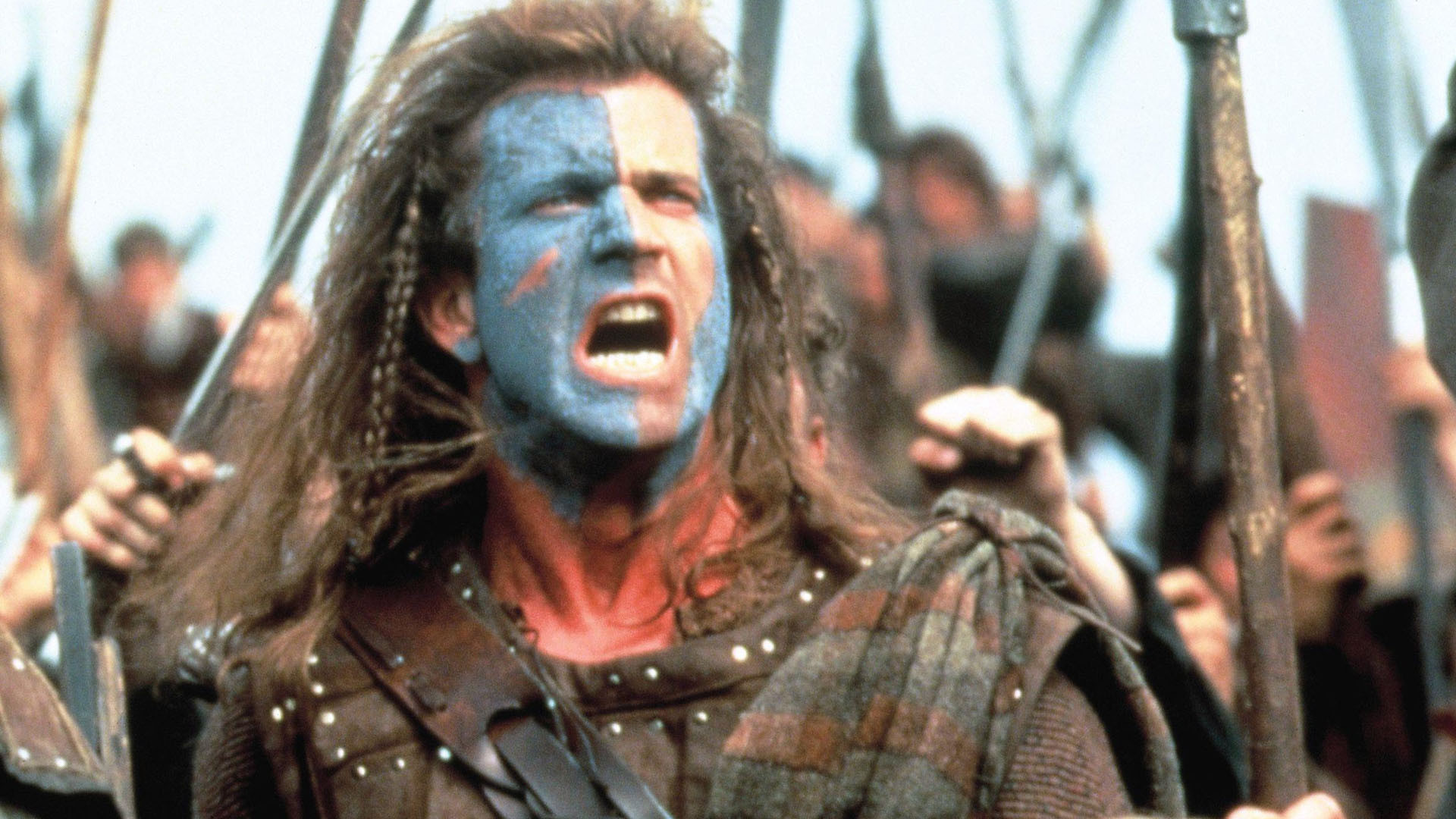
(Oh, the irony of using Mel Gibson here, right?)

So few of us will have the chance to plan our last words. All we can hope for is that all of our words are suitable to be the ones we're remembered by.

Now, let's finish up this Torah, roll it back to the start and create it all over again.
Don't forget the chicken!


Monday, September 28, 2015

Up on the Roof


It's so easy to see how ancient peoples looked up at the sky and thought magical, all powerful beings must rule that realm. Tonight as I sit on our roof and watch the moon disappear into my planet's shadow as we all hurtle through space, I call to mind the verses that start the Torah.


Science tells us that these verses are not accurate, but that's not what mythical creation stories are for. 
Separate your scrolls from your textbooks.
Biblical stories don't explain the mechanics of the world, they dig into the human imagination as we look to the sky with awe and wonder and ask "Why?" and "How?" and "What does this mean?"
We place ourselves in the universe many ways. 
  • Our stories. 
  • Our teachings. 
  • Our maps. 
  • Our experiences. 
  • Our hearts. 
  • Our neurons firing and connecting in our brains. 
  • Our guiding lights seemingly fixed in the sky.


What do we do when one of those guideposts is temporarily taken away, blocked by something out of our control?
We adjust. We find a new star to guide us, and we wait to see if the shadow will leave.
No matter how well we understand some things scientifically, we did not set the universe in motion, set the stars in the sky or put the moon on its path.
I am humble before this astronomical event, and I feel my smallness.
Goodnight, Moon.